Struggling to find a cat-safe ant repellent that works? When ant colonies, which can grow to an impressive 50,000+ members, invade your home, your first instinct might be to reach for commercial pesticides. However, these products often contain chemicals that could harm your curious feline companions.
Fortunately, effective natural ant repellent safe for cats solutions exist, which can tackle your ant problem without putting your cat at risk. Diatomaceous earth, for example, is a natural ant repellent safe for cats that is considered “generally recognized as safe” by the FDA and effectively eliminates ants. Additionally, substances like vinegar and certain essential oils can serve as powerful deterrents against these persistent insects.
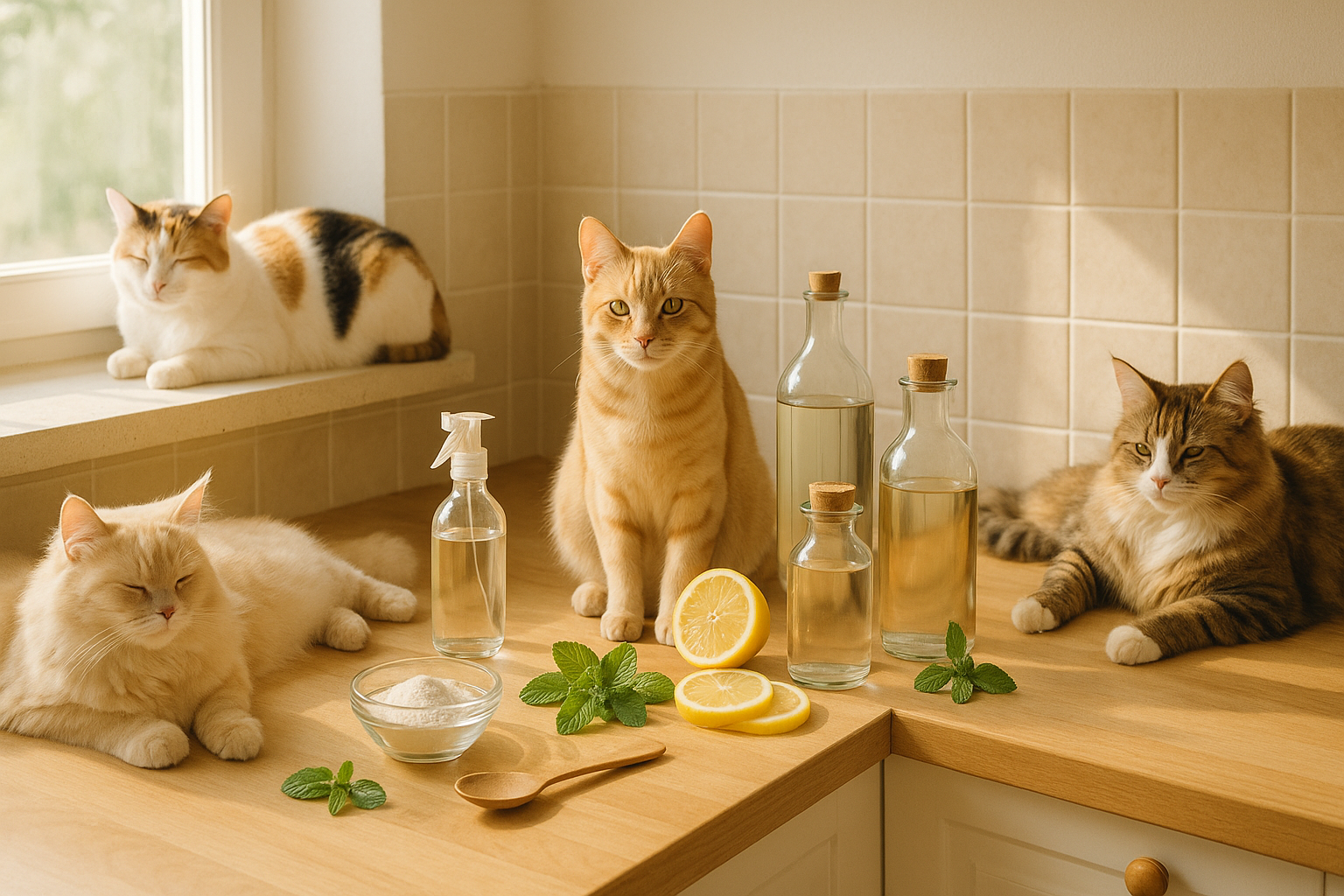
In this guide, you’ll discover five easy cat-safe ant repellent homemade recipes you can prepare today using ingredients you likely already have at home. These cat-safe ant repellent solutions work effectively for both indoor and outdoor ant problems, giving you peace of mind about your cat’s safety while keeping those unwanted six-legged visitors at bay.
Start with Prevention Before Repellents
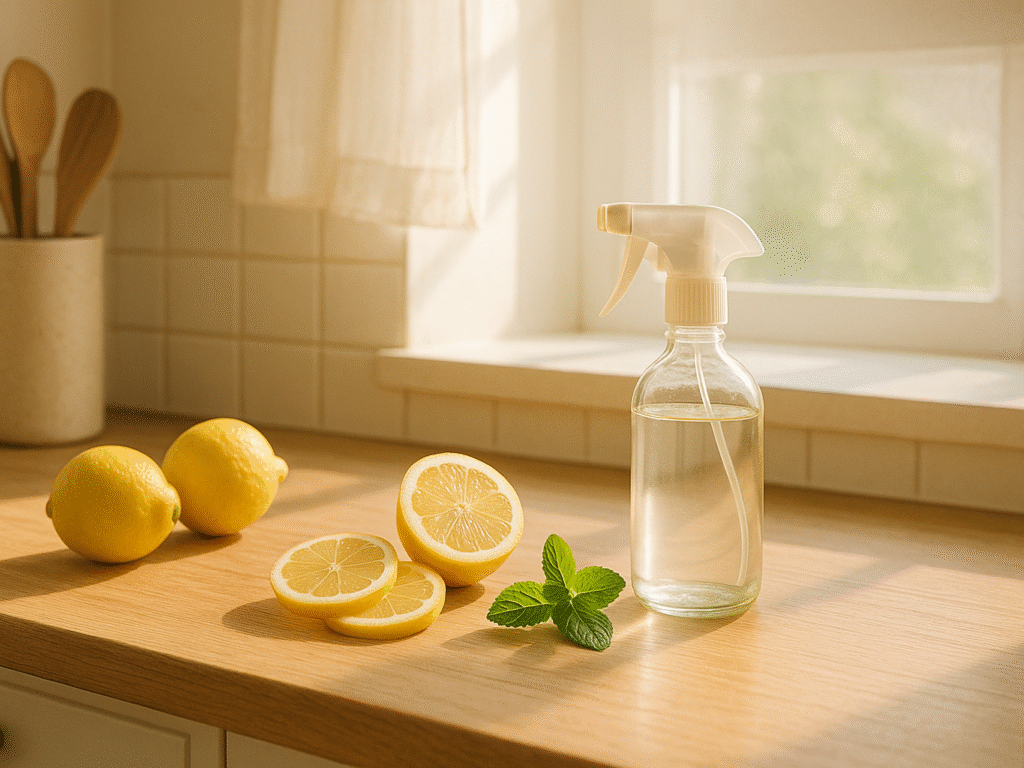
Before mixing any homemade solutions, consider these effective prevention tactics to reduce your ant problem significantly. The most effective cat-safe ant repellent home remedy strategy starts with making your home less inviting to these persistent insects in the first place.
1. Seal cracks and entry points.
Ants are remarkably resourceful creatures that can squeeze through the tiniest openings to access your home. Initially, conduct a thorough inspection of your property to identify potential entry points.
Check these common areas where ants typically gain access:
- Gaps around the window and door frames
- Cracks in walls and foundations
- Openings around utility lines and pipes
- Vents and air conditioning units
- Baseboards and flooring transitions
Once identified, seal these openings using appropriate materials. Silicone or acrylic latex caulk works excellently for minor cracks around windows and doors. For larger gaps around utility lines or vents, expandable foam sealant provides an effective barrier against drafts. Furthermore, installing weatherstripping around doors and windows helps close any remaining gaps that might serve as ant highways.
Performing regular inspections of your home for new cracks or deteriorating seals is crucial for maintaining an ant-proof barrier. Throughout the year, especially after extreme weather conditions, check that all seals remain intact.
2. Keep pet food areas clean.
Your cat’s dining area can quickly become an ant magnet if it is not maintained correctly. Consequently, regular cleaning of your pet’s feeding station is essential for preventing ant invasions.
After your cat finishes eating, clean up any spilled kibble or wet food residue promptly. Even tiny crumbs can create a scent trail that attracts worker ants searching for food to bring back to their colony.
Implement these cleaning practices:
- Sweep or vacuum around feeding areas daily to eliminate food particles
- Immediately wipe up wet food spills, which are particularly attractive to ants
- Regularly wash your pet’s food and water bowls to remove residue
- Clean the floor and baseboards surrounding the feeding station
Additionally, avoid leaving your cat’s food out for extended periods of time. Although some automatic feeders claim to be “ant-proof,” it’s best to feed cats only the amount they can eat in a 30-minute sitting rather than leaving food available all day.
3. Store food in airtight containers
Proper storage of your cat’s food is a cornerstone of effective ant prevention. The original packaging for pet food, typically paper bags or thin plastic, is surprisingly vulnerable to ant invasions.
Transfer dry cat food from its original packaging into sealed plastic or metal containers with secure lids. This practice serves two critical purposes: it prevents ants from detecting food scents and physically blocks their access to the kibble.
Choose containers that:
- Have tight-fitting lids that create a proper seal
- They are made of sturdy materials that ants cannot chew through
- Keep food fresh while containing scents that might attract ants
Store these containers on shelves or in cabinets rather than directly on the floor, where ants are more likely to discover them. Additionally, if you’re dealing with ant problems both indoors and outdoors, implementing natural ant repellent strategies for your garden can help prevent colonies from establishing near your home’s perimeter. Importantly, before refilling storage containers, wipe them out thoroughly to remove lingering food dust and crumbs that might attract ants.
4. Use water moats under pet bowls.
Creating a water barrier around your cat’s food bowl is particularly effective since ants cannot swim across water. This simple yet ingenious solution prevents ants from reaching the food while remaining completely safe for your feline companion.
To create a water moat:
- Place your cat’s food dish inside a larger, shallow tray or bowl
- Fill the outer container with a small amount of water
- Make sure the inner food bowl remains stable and dry
For enhanced effectiveness, add a drop of dish soap to the water to break surface tension, which prevents bugs from being able to walk on the water’s surface. Just ensure your cat doesn’t drink from this moor water.
Several commercial options specifically designed for this purpose are available:
- The Antser: Uses a combination of water and soap in its bottom section, while food and water bowls sit on the flat top
- Fool-A-Bug: A UV-rated, non-toxic resin system that doesn’t require water
- Ant-proof pet food dishes: Feature unique designs that prevent ants from climbing into the food area
Remember to change the water in these moor systems regularly, at least once a month, for systems like The Antser. Throughout warmer months, check more frequently as evaporation occurs more rapidly.
By implementing these preventative measures, you’ll create a much less hospitable environment for ants, potentially eliminating the need for repellents. Nevertheless, if ants persist despite your prevention efforts, the cat-safe ant repellent recipes in the upcoming sections will provide additional solutions without endangering your feline friend.
Recipe 1: Vinegar and Water Spray
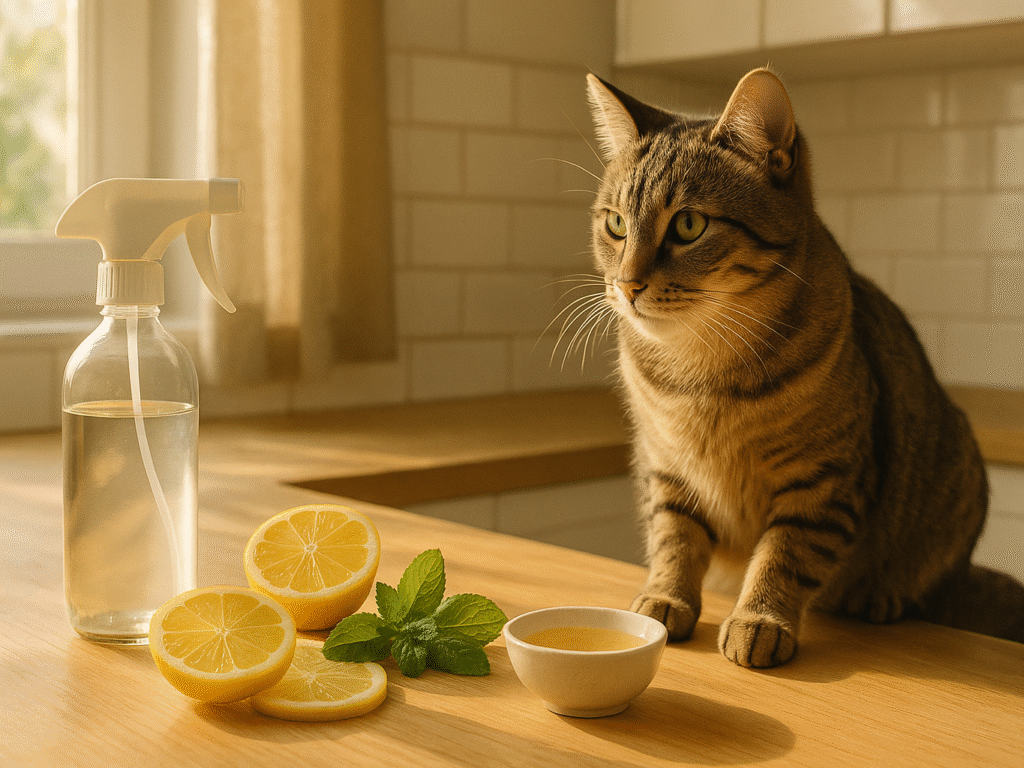
Vinegar stands out as a powerful, yet simple solution for your ant problem that won’t harm your feline friends. This acidic kitchen staple creates an effective cat-safe ant repellent that tackles those pesky invaders without introducing harmful chemicals into your home.
(i) How it works to disrupt ant trails
The science behind vinegar’s effectiveness against ants lies in its ability to interfere with their communication system. Ants rely heavily on pheromone trails to navigate and share information about food sources with other members of their colony. When you spray vinegar on these trails, it masks the pheromones, effectively erasing the invisible highways ants use to travel.
Moreover, the pungent odor of vinegar is particularly unpleasant to ants. Much like garlic, lavender, and certain essential oils, vinegar’s powerful smell overwhelms the insects’ sensitive receptors. It creates confusion among the worker ants as they can no longer detect their colony’s scent markers, forcing them to find alternative routes.
When appropriately applied, vinegar creates a temporary but effective barrier that:
- Disrupts existing pheromone trails
- Prevents other ants from following these trails
- Creates an unpleasant environment that ants actively avoid
- Forces ants to seek new entry points or food sources
It’s worth noting that vinegar isn’t a permanent solution. Unlike toxic pesticides that kill ants and their colonies, vinegar primarily acts as a deterrent to ants, rather than a direct killer of them. Once the vinegar scent evaporates, ants may return to establish new trails. It makes regular application crucial for maintaining its effectiveness as a natural ant repellent safe for cats.
(ii) Safe usage around cats
Indeed, safety is paramount when selecting any pest control method that involves pets. The good news is that vinegar, when properly diluted, is generally safe to use around cats. Unlike chemical pesticides that can cause serious health issues in felines, vinegar poses minimal risk.
Nonetheless, there are significant safety considerations to keep in mind:
- Proper dilution is key: Pure, undiluted vinegar is highly acidic and can irritate your cat’s mucous membranes if consumed. A 50/50 mixture of vinegar and water creates a cat-safe ant spray that retains effectiveness while minimizing potential irritation.
- Ventilation matters: Cats have sensitive respiratory systems, and some may find the pungent odors of vinegar unpleasant or irritating. After applying your vinegar solution, ensure rooms are well-ventilated to prevent any respiratory discomfort. It allows the solution to work against ants while quickly dissipating to levels comfortable for your cat.
- Application timing: Consider applying the spray when your cat is in another room or outdoors. It gives the strongest vinegar odor time to dissipate before your pet returns. Though unlikely to cause harm even with direct exposure, this approach minimizes any potential discomfort.
Indeed, many cat owners report that their pets simply avoid areas freshly sprayed with vinegar until the smell fades. This natural avoidance behavior works in your favor, keeping cats away from treated areas during the initial application period.
As the solution dries, it’s typically safe for cats to walk over treated surfaces. Even if they groom themselves afterward and ingest small amounts of the dried vinegar solution, it’s unlikely to cause issues. It makes vinegar a significantly safer choice than conventional ant killers that may contain neurotoxins harmful to mammals.
(iii) Where to apply indoors
The strategic application of your vinegar and water solution maximizes effectiveness while minimizing the amount required. Knowing exactly where to apply this cat-safe ant repellent indoors makes all the difference in successfully managing an ant infestation.
Start by creating your solution:
- Mix equal parts white vinegar and water in a clean spray bottle
- Shake well to ensure thorough mixing
- Label the bottle clearly to avoid confusion with other household sprays
Accordingly, focus your application on these key indoor areas:
- Entry points: Thoroughly spray windowsills, doorframes, and baseboards where ants commonly enter homes. These boundaries serve as the first line of defense against new ant invasions.
- Active ant trails: When you spot ants marching in a line, spray the solution directly on them and wipe with a damp paper towel. It immediately disrupts their activity and removes their scent markers.
- Kitchen surfaces: Pay special attention to countertops, cabinet edges, and areas around the sink where food residue might attract ants. After spraying, allow the solution to sit for a brief period before wiping down the surfaces.
- Pet feeding areas: Spray the floor and baseboards around your cat’s feeding station, but not the food itself. It creates a protective perimeter that deters ants while keeping your cat’s meals untainted.
- Hidden spaces: Don’t forget less visible areas, such as behind appliances, under sinks, and along pipe entries, where ants might travel unseen.
For optimal results, apply the vinegar solution every few days or as needed when you notice renewed ant activity. Naturally, areas exposed to water or heavy cleaning will require more frequent applications, as the vinegar scent diminishes faster in these locations.
During peak ant season, you might need daily application in high-traffic ant areas. Ultimately, consistency is key; sporadic use won’t provide the required continuous barrier to deter determined ant colonies effectively.
One final tip: Keep a dedicated spray bottle of your vinegar solution ready at all times during ant season. It allows for immediate response when you spot early signs of ant activity, preventing minor invasions from becoming major infestations.
Recipe 2: Diatomaceous Earth Barrier
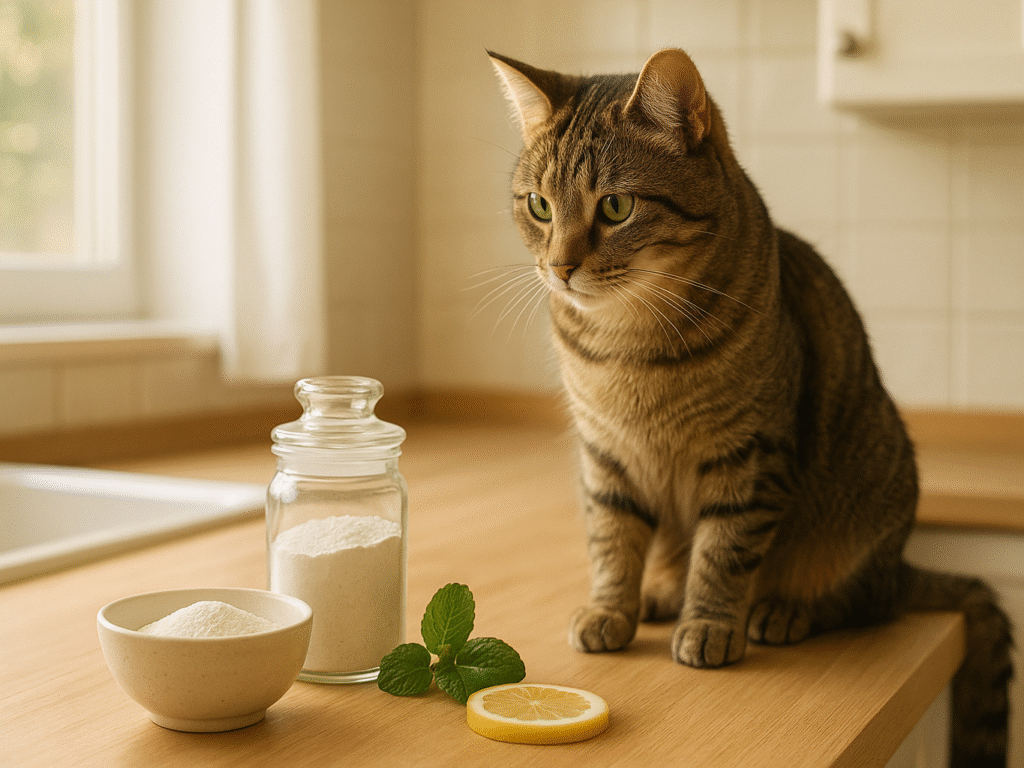
For a longer-lasting, cat-safe ant repellent option, diatomaceous earth (DE) creates an effective barrier that works through a completely different mechanism than liquid sprays. This natural ant repellent, safe for cats, is a fine, chalky white powder made from the fossilized remains of tiny aquatic organisms called diatoms, whose skeletons are rich in silica.
(i) Why is food-grade DE important
When shopping for diatomaceous earth as a natural ant repellent safe for cats, it is crucial to distinguish between different types for safety. Food-grade diatomaceous earth is the only version you should use around your home and pets. The FDA considers food-grade DE to be“generally recognized as safe”, making it an excellent choice for households with curious felines.
In contrast, pool-grade diatomaceous earth has been chemically treated and is highly toxic. This version is primarily used for swimming pool filtration systems and should never be used for pest control in homes with pets.
Food-grade DE works mechanically rather than chemically to eliminate ants. The powder appears soft to human touch, yet on a microscopic level, it’s razor-sharp. These microscopic edges cut into the protective exoskeleton of insects, subsequently absorbing oils and moisture from their bodies. This process causes the ants to dehydrate and die within about 24 hours of exposure. As an added benefit, because DE works physically rather than chemically, ants cannot build resistance to it as they might with pesticides.
(ii) How to apply safely around pets
Although this cat-safe and repellent homemade solution using food-grade DE is non-toxic to cats, proper application is crucial to ensure your pet’s comfort and safety. First, put on a pair of gloves and wear a respiratory mask before handling the powder. This precaution isn’t because DE is toxic, but because its fine particles can cause respiratory discomfort if inhaled in significant quantities.
When applying diatomaceous earth as a cat-safe ant repellent, a homemade solution:
- Wait 30-60 minutes after application before allowing pets back into treated areas
- Apply in a thin layer where cats don’t frequently visit, under appliances, behind furniture, or in cabinets
- Avoid creating thick piles that curious cats might ingest, as large quantities could cause digestive issues
- Keep DE dry at all times; it loses effectiveness when wet
To use this cat-safe ant repellent indoors, sprinkle a thin, even layer in target areas. You can control the application better by using a squeeze bottle to direct the powder precisely where needed. After application, allow the dust to settle completely before permitting your cat back into the area.
Most cats naturally avoid areas with dust until it settles completely. This avoidance behavior works in your favor, keeping them away from treated areas during the initial application period. Overall, with proper application and minimal direct exposure, diatomaceous earth remains one of the safest natural ant repellent options for households with cats.
(iii) Best Places to Sprinkle Diatomaceous Earth (DE)
a) Create a Defensive Perimeter Indoors
Maximize your DE’s ant-repelling power by targeting entry points. Apply a 6–12 inch band around your home’s foundation, doorways, windows, and especially baseboards or corners. These are prime ant entry zones. Don’t forget to treat cracks, wall seams, and floor edges where ants are most active.
b) Focus on Hidden Ant Trails
Look closely at the ant movement. Apply DE directly on visible trails, near wall bases, and inside crevices. Sprinkle it under and behind appliances like stoves, dishwashers, or refrigerators, in areas where ants are frequently foun,d but humans often overlook. In these low-traffic areas, DE remains dry and effective for an extended period.
c) Target Kitchens, Bathrooms & Outdoors
Food and water attract ants, so apply DE around sinks, cabinets, and under kitchen counters. For a cat-safe ant repellent for outside use, lightly dust infested plants and create a barrier around potted soil or garden beds. Use this cat-safe ant repellent for outside by sprinkling directly on ant hills or nests to attack colonies at their source and disrupt their travel routes.
d) Essential Tips for Effective DE Use
Diatomaceous earth is effective only when dry and in direct contact with ants, so keep it away from wet areas. Reapply after vacuuming or cleaning. In humid regions or high-traffic zones, you may need to apply more frequently. Results may not be instant; they may take a few days or weeks.
Despite the wait, DE remains one of the best natural ant repellent safe for cats options available. When placed correctly and used consistently, it offers a non-toxic, long-lasting solution that’s safe for curious cats and effective against ants, both indoors and outdoors.
Natural Ant Repellent for Garden: 8 Proven Ways to Protect Plants Without Chemicals: Extend your pest control efforts outdoors with these chemical-free garden solutions. Discover proven methods to protect your plants while maintaining a safe environment for both cats and beneficial insects in your yard.
Recipe 3: Lemon Juice and Peppermint Oil Mix
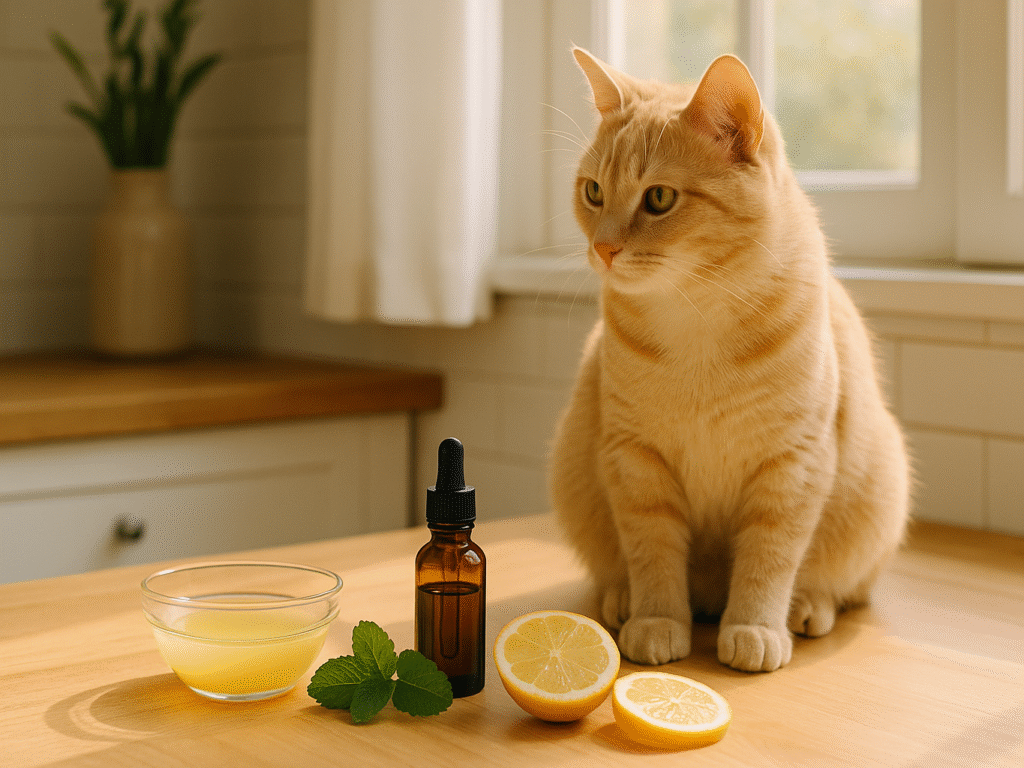
Lemon juice combined with peppermint oil offers a fragrant option in your arsenal against ant invasions. This aromatic cat-safe ant repellent home remedy employs a dual-action approach that many homeowners find effective; however, it requires special consideration when used in households with feline companions.
(i) Natural ant repellent safe for cats (with caution)
The acidic properties of lemon juice make it an excellent ant deterrent by masking their scent trails. When ants can’t detect these chemical pathways, they become disoriented and typically retreat. To create a basic lemon juice spray, simply mix one part lemon juice with three parts water and apply it around entry points, such as door frames and window sills.
Peppermint oil amplifies this effect as its pungent aroma interferes with the pheromone trails ants use to communicate and navigate. For a more permanent solution, consider growing specific plants that naturally repel ants around your home’s perimeter. Together, these ingredients create a potent barrier that many ants avoid crossing. Studies have found that peppermint oil helps explicitly repel the invasive European red ant.
To prepare this cat-safe and repellent homemade solution:
- 1 cup water
- 1 cup lemon juice (fresh or concentrated)
- 10 drops of peppermint essential oil
Mix all ingredients in a clean spray bottle and shake thoroughly before each use. This solution can be applied around potential entry points, baseboards, and areas where you’ve spotted ant activity.
It’s worth noting that this remedy provides temporary relief rather than permanent elimination. As with most natural solutions, the effects of this remedy fade as the scents dissipate, requiring regular reapplication for continued effectiveness. Primarily, this cat-safe ant repellent home remedy works best as part of your broader prevention strategy rather than as a standalone solution for severe infestations.
(ii) Dilution tips for essential oils
Proper dilution of peppermint oil is not only recommended, but it’s essential when creating a cat-safe homemade ant repellent solution. Essential oils in their concentrated form can be overwhelming and potentially harmful, especially in households with pets.
The correct dilution ratio for peppermint oil in ant repellent solutions is typically 10-20 drops per 2 cups of liquid. If you’re interested in exploring other essential oils that effectively repel ants, proper dilution remains crucial for pet safety. It creates a concentration strong enough to deter ants while minimizing risks to your feline companion.
Take these precautions when preparing your mixture:
- Always measure essential oils precisely, don’t estimate
- Use a carrier liquid (water and lemon juice in this case) to dilute the oil properly
- Store the solution in a dark glass bottle when possible, as light can degrade essential oils
- Label the bottle clearly to prevent accidental misuse
In addition to proper dilution, using the appropriate application methods helps minimize risks. Spray the solution directly onto surfaces rather than into the air, where it might be inhaled. Plus, ensure rooms are well-ventilated after application to allow fumes to dissipate quickly.
(iii) Avoiding toxicity in cats
It is where caution becomes paramount. Although natural and essential oils, including peppermint oil, can be beneficial to humans, they can be harmful to cats. Cats lack certain liver enzymes needed to metabolize and eliminate compounds found in essential oils. This metabolic difference means that substances safe for humans can accumulate to toxic levels in feline systems.
Signs of essential oil toxicity in cats may include:
- Drooling or vomiting
- Difficulty breathing or walking
- Muscle tremors
- Lethargy or weakness
- Pawing at the mouth or face
To use this recipe safely in homes with cats:
- Never apply this cat-safe ant repellent mixture directly onto your cat or where they sleep
- Avoid spraying near food bowls, bedding, or favorite lounging spots
- Keep cats away from treated areas until completely dry
- Store essential oils in places cats cannot access
- Always wash your hands after handling the solution
Most importantly, use this solution only in targeted locations where ants enter but cats rarely frequent. Behind appliances, along external doorways, or in cabinets inaccessible to your cat are ideal spots. In comparison to the vinegar solution or diatomaceous earth discussed earlier, this recipe requires the most caution around cats.
Thankfully, many cats naturally avoid areas with intense scents of essential oils. This avoidance behavior works in your favor, as it helps keep them away from areas that have been treated. Still, never rely solely on this natural aversion; always take proactive steps to prevent exposure.
Should you notice any concerning symptoms in your cat after using this or any cat-safe ant repellent indoors solution, contact your veterinarian immediately. A quick response to potential toxicity is crucial for your pet’s well-being.
Given these considerations, this particular cat safe ant repellent home remedy is suitable for outside use only. Otherwise, the lemon juice component alone (without peppermint oil) can provide a milder alternative that poses minimal risk to feline family members while still deterring ants to some degree.
10 Powerful Ant Repellent Plants That Actually Work (Indoors & Outdoors): Nature’s pest deterrents can complement your homemade solutions perfectly. Discover which plants naturally repel ants and learn how to place them around your home strategically for optimal effectiveness.
Recipe 4: Baking Soda and Sugar Bait
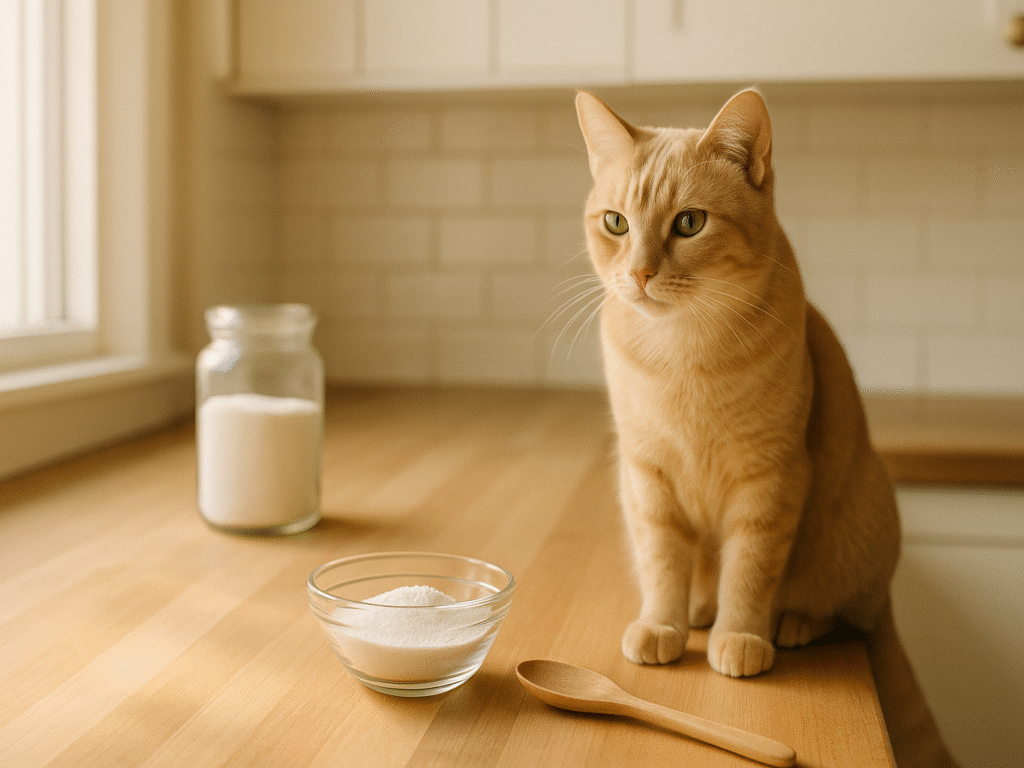
Unlike the repellent options discussed earlier, baking soda and sugar create a bait that attracts ants to consume it and carry it back to their colony. This simple yet effective natural ant repellent, safe for cats, offers a colony-targeting approach without using harsh chemicals that might harm your curious feline.
(i) How it targets the colony
Baking soda works through a fascinating chemical reaction inside the ant’s body. When an ant consumes this mixture, the baking soda reacts with the acid in its digestive system, producing carbon dioxide gas. This internal reaction creates a fatal situation for the ant; the carbon dioxide cannot be expelled from the ant’s small body, causing internal damage.
What makes this approach particularly compelling is that it doesn’t just eliminate individual ants you see wandering around your home; it also eliminates the entire colony. In essence, the sugar component serves as a powerful attractant that entices worker ants to collect the mixture and transport it back to their nest. One ant told the other ants, and soon, you’ve targeted the entire colony at its source.
To prepare this cat-safe and repellent homemade solution:
- 1 part baking soda
- 1 part powdered sugar (not granulated)
- Small amount of hot water (1-2 fluid oz.)
Mix the dry ingredients thoroughly first, then slowly add hot water while stirring until you achieve a thick, gel-like slurry. The consistency should be viscous enough that ants can carry particles back to their nest, but not so liquid that it’s challenging to control placement.
(ii) Safer alternative to borax
Primarily, this recipe serves as an excellent replacement for borax-based ant baits, which have long been a popular DIY solution. While borax effectively kills ants by disrupting their digestive systems, it presents a higher toxicity risk to pets and children if ingested.
Baking soda provides similar effectiveness against ants without the same level of concern for your cat’s safety. It’s significantly less toxic than both boric acid and borax, making it a preferable option in homes with curious felines. Many commercial ant baits contain substances like Avermectin or Borax, which, while generally considered safe in the small quantities within traps, could cause digestive tract irritation or blockage if your cat managed to ingest part of the plastic or cardboard container.
Moreover, unlike some other ant control methods, this baking soda mixture doesn’t require essential oils that could be harmful to cats. It works through a physical/chemical reaction rather than through toxins that might accumulate in a cat’s system.
(iii) Placement tips to keep cats safe
Strategic placement of your baking soda bait is crucial both for effectiveness against ants and for protecting your cat:
- Place small spoonfuls of the mixture on plastic lids or other impervious containers that ants can easily access
- Position these baits in areas where you commonly see ant activity
- Make multiple placements (5-10) to increase effectiveness
- Always locate baits where pets cannot reach them
Ideal locations include:
- Behind appliances where cats can’t squeeze through
- Inside cabinets are secured with child-proof latches
- Near entry points that are inaccessible to pets
- Along exterior walls outside your home, where cat safe ant repellent for outside application is most effective
- Near ant trails but away from pet traffic areas
Before placement, observe your cat’s routine to identify areas it rarely visits. Refresh your bait stations every few days, as the effectiveness of the mixture diminishes once it dries out completely.
If you’re concerned about your cat’s curiosity, consider creating protected bait stations using small containers with tiny holes that allow ants to enter but prevent cat access. Alternatively, use this cat-safe ant repellent for an outside mixture near ant nests to target colonies before they enter your home.
Remember that while this natural cat safe ant repellent is safer than many alternatives, it’s still best to minimize your pet’s exposure. Monitor the bait stations regularly and remove them once your ant problem subsides. For persistent infestations, you might need to reapply the mixture every few days as part of your comprehensive ant management strategy.
Recipe 5: Soap and Water Spray
One of the simplest yet practical solutions in your arsenal against household ants is a basic soap and water spray. This straightforward mixture provides a natural ant repellent safe for cats that utilizes only items commonly found in your kitchen.
(i) Quick contact killer for visible ants
The science behind soap’s effectiveness lies in its interaction with the ant’s body structure. Upon contact, dish soap penetrates the ant’s exoskeleton, causing it to suffocate immediately. This physical reaction makes it impossible for ants to develop resistance to this method, unlike chemical pesticides.
To create this cat-safe and repellent homemade spray:
- Mix 2 ounces of dish soap with 32 ounces of water in a spray bottle
- Shake gently to combine without creating excessive foam
- Apply directly to visible ants for immediate results
The solution works by disrupting the protective outer coating of ants. Essentially, the soap dissolves the waxy exoskeleton that helps retain moisture, causing ants to dehydrate and die within minutes of exposure. It makes it an excellent option for targeting individual ants or small groups that have infiltrated your home.
(ii) How to wipe pheromone trails
Beyond killing individual ants, a soap and water solution effectively erases the invisible highways that guide ant colonies. Ants communicate through chemical markers, pheromones, that lead other ants to food sources.
When applied to surfaces where ants have traveled, the soapy solution removes these scent markers, thereby confusing the colony. After spraying:
- Wipe the area thoroughly, leaving a light residue
- Focus on countertops, baseboards, and windowsills
- Pay special attention to areas where ants congregate
Everyday household products, such as soaps, glass cleaners, liquid dish detergents, and hand soaps, all work effectively for this purpose. For optimal results, repeat applications may be necessary as new trails form.
(iii) When to use this method
The soap and water spray method proves most valuable as a targeted approach for specific situations. First, it works best as an immediate response to visible ant activity. Likewise, this solution excels at handling early-stage infestations before they become established.
This natural ant killer, safe for pets, is ideal when:
- You spot a sudden influx of scout ants
- Dealing with ants around food preparation areas
- Needing to clean up after removing food attractants
- Managing soft-bodied pests
As a short-term solution, soap spray complements longer-lasting prevention methods described earlier. Typically, you’ll need to reapply after cleaning or when new ant activity appears. Most importantly, this cat-safe ant repellent home remedy offers peace of mind for cat owners since it leaves no toxic residue.
10 Essential Oils That Repel Ants Naturally (And How to Use Them): Explore the complete guide to using essential oils safely around cats for ant control. Discover which oils work best and proper dilution methods to protect your pets while deterring pests.
Final Take on Cat Safe Ant Repellents
Dealing with ants while keeping your cat safe requires thoughtful action. These five natural solutions offer effective, pet-safe alternatives. Vinegar disrupts pheromone trails, diatomaceous earth forms physical barriers, lemon-peppermint sprays repel with scent, baking soda targets colonies, and soapy water offers quick relief, all using ingredients safe for most feline households, and choosing the right cat-safe and repellent means combining these methods based on your home’s needs, offering both safety and effectiveness without compromising your pet’s health.
Prevention is key. Keep feeding zones spotless, store pet food in sealed containers, and block ant entry points. Add water moats to bowls for extra protection. These steps stop infestations before they start, creating a home environment that’s both ant-proof and safe for curious, four-legged family members.
Natural methods may need more frequent use, but they drastically reduce exposure to toxins. Place essential oil mixes carefully, away from areas where cats are present. A combined approach, barriers, baits, and sprays, works best. With these easy, cat-friendly strategies, you can confidently defend your home without compromising your pet’s health or comfort.
FAQs on cat-safe ant repellent
Q1. Are vinegar-based ant repellents safe for cats?
Yes, vinegar-based ant repellents are generally safe for cats when used properly and diluted. A 50/50 mixture of vinegar and water creates an effective and pet-friendly solution. However, it’s best to apply when cats are not in the room and ensure good ventilation.
Q2. How does diatomaceous earth work to repel ants without harming cats?
Diatomaceous earth works mechanically by cutting into the exoskeletons of ants, causing them to dehydrate and die. It’s non-toxic to cats when food-grade DE is used. Apply a thin layer in areas where ants trav,el but cats don’t frequently visit, and allow the dust to settle before letting cats back into the area.
Q3. Can I use essential oils, such as peppermint, to repel ants if I have cats?
While peppermint oil can repel ants, it should be used with extreme caution around cats. Essential oils can be toxic to felines. If used, ensure proper dilution (10-20 drops per 2 cups of liquid) and apply only in areas inaccessible to cats. Consider using lemon juice alone as a safer alternative.
Q4. What’s a safe alternative to borax-based ant baits for homes with cats?
A mixture of equal parts baking soda and powdered sugar serves as a safer alternative to borax-based baits. This solution attracts ants and eliminates them through a chemical reaction in their digestive system. Place the mixture in areas inaccessible to cats for best results and safety.